Discover the common types of metal roofs for businesses, including standing seam and zinc options, offering durability, energy efficiency, and long-term savings.
Standing seam metal roofing
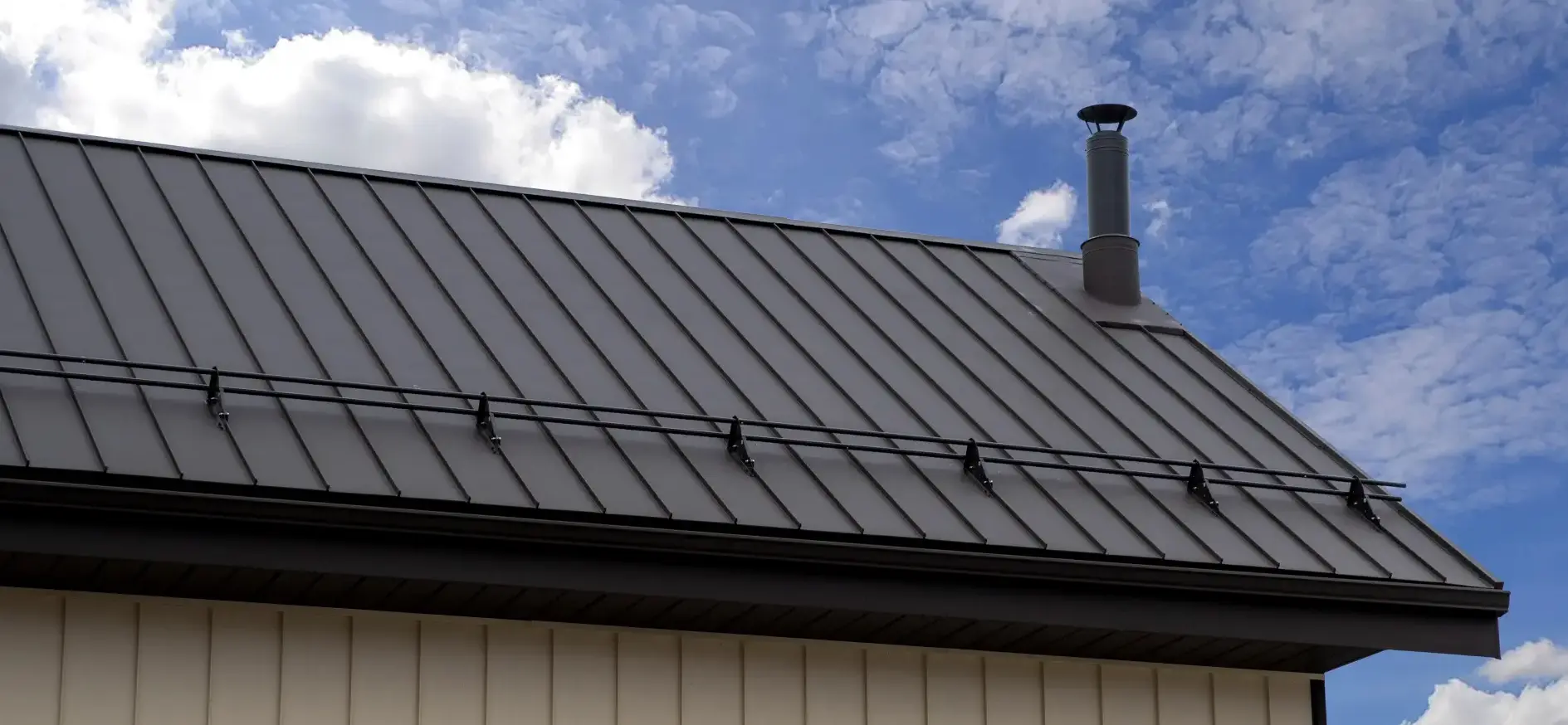
Standing seam roofing is usually picked for the roofing on most commercial properties. This material is created using continuous metal panels that run from the ridge to the eaves. These are connected with raised seams, which stand above the flat surface.
The seams tend to be locked or crimped together to form a tight seal, offering excellent weather protection and a distinctive, modern appearance.
The clip arrangement must allow for thermal movement. Materials include galvanised steel, aluminium, or copper, need finishes and details appropriate to the metal. Steel generally needs protective coatings, while copper develops a natural patina. Weather resistance depends on the complete installation.
For businesses, standing seam metal roofing offers a professional look while requiring minimal maintenance. With complete care, it can often last 40 years or more, and its concealed fasteners mean fewer potential failure points. It is also a suitable base for additional features like solar panels.
This type of roofing is a popular choice for offices, retail spaces, warehouses, and many other commercial buildings, whether for new projects or property refurbishments.

The raised design also enables natural expansion and contraction that tends to come with temperature changes. These aspects will help reduce the risk of damage over time.
The fixings must be compatible with the covering, and the tray length determines how movement is accommodated. Steel coatings and natural copper patina protect their respective materials in different ways.
This type of roofing is valued for its long lifespan, often lasting 40 years or more with minimal maintenance. The concealed fasteners mean there are fewer weak points, making it highly reliable in wind, rain, and snow.
Its sleek, clean appearance can enhance the look of a business property, while also working well with modern additions like solar panels. Standing seam metal roofing is often used on offices, warehouses, and retail buildings, making it a practical and visually appealing choice for many commercial projects.
Corrugated metal roofing
If you're looking for a much more cost-effective and versatile option that is widely used for commercial, industrial, and agricultural buildings, why not opt for corrugated metal? It is made from metal sheets shaped into a repeating pattern of ridges and grooves, which gives the material extra strength and rigidity.
This design helps it withstand heavy rain, strong winds, and even impacts. Corrugated metal panels are typically made from galvanised steel or aluminium, and usually coated or painted before or after installation to improve their resistance to rust and enhance their appearance.
This roofing type is known for its long service life and low maintenance needs. It is lightweight, making installation quicker and more affordable compared to some other roofing systems. It has a distinctive ridged pattern to help water drain away properly, and adequate pitch, sound laps and clear drainage remain necessary to prevent pooling and leaks.
Corrugated metal roofing is available in a number of thicknesses and finishes, so businesses can choose a style that matches their property's needs. It is a popular choice for warehouses, workshops, farm buildings, and budget-conscious projects where durability and functionality are key.
Are you considering metal roofing installation or replacement?
Riverside provides metal roofing installation, replacement, repairs and cladding for homes and commercial buildings across London, Oxfordshire and Cambridgeshire. Our services include zinc, copper and aluminium roofing, with coverage in the following areas:
Zinc roofing for commercial use
Zinc roofing is a suitable option for those who need roofing for commercial buildings; it is most valued for its great durability, unique appearance, and sustainability. Made from natural zinc, this roofing material forms a protective layer called a patina when exposed to air and moisture.
The patina gives the roof its characteristic matte grey or blue-grey finish, and also acts as a strong barrier against any corrosion, scratches, or weathering. This means zinc roofing can often last around 60 to 100 years with little maintenance, reducing the extremely long-term costs. Its natural resistance to mould, fungus, and rust further adds to its appeal for businesses seeking reliability and longevity.

In commercial applications, zinc roofing is a versatile choice for many builders. It is lightweight yet strong, meaning it can be used on several kinds of roof shapes, from suitable low-pitch designs to complex curves and more modern architecture. It performs well in a range of climates and temperatures, so it's great for coping with heavy rain and snow without cracking or warping.
Zinc is also completely recyclable, making it the perfect choice for any business that may have sustainability goals. Available in a number of finishes and colours, zinc roofing can suit anything from sleek, contemporary office spaces to statement retail buildings, providing both aesthetic value and long-term performance.
Which type is best for your business?
The best type of metal roofing for your business will depend on your budget, building style, and long-term goals. If you prefer a sleek, modern look with excellent weather resistance, standing seam metal roofing is a strong choice, offering strength and a potentially long service life with appropriate inspection and maintenance.
For a more cost-effective and practical solution, corrugated metal roofing provides reliable performance, quick installation, and good protection, making it ideal for warehouses, workshops, and agricultural buildings. If high-quality and distinctive appearances are some of your biggest priorities, zinc roofing offers plenty of longevity, a unique patina finish, and strong environmental benefits.
You may also want to consider the metal itself when planning your roofing project. Aluminium is a lightweight choice, it's corrosion-resistant, and tends to work well in coastal areas. Steel is strong, affordable, and available in various coatings for added durability.
Copper can be highly durable, develop an attractive natural patina, and add a striking visual element, although it comes at a higher cost. When deciding, think about your local climate, the style of your building, and whether you plan to add features such as solar panels.
Balancing the starting cost with its overall lifespan and the maintenance requirements will help make sure your property remains well-protected, visually appealing, and cost-efficient for many years.
Roof Profiles and Roofing Metals Are Different Choices
Standing seam and corrugated describe the shape and jointing of a roof; steel, aluminium, zinc and copper describe the material. A zinc roof can therefore also be a standing-seam roof. The useful comparison is between complete combinations of material, profile and supporting construction.
Coated steel can suit large industrial roof areas, while aluminium is useful where weight and exposure matter. Zinc and copper can suit architectural roofs and complex junctions. Ask how each proposed system handles wind suction, thermal movement, drainage, rooflights and the environment around the premises. The most suitable roof is not necessarily the cheapest sheet.
Single-Skin, Built-Up and Insulated Panel Roofs
A single-skin sheet provides a weather covering without an insulated core. It may suit an unheated store, whereas an occupied office or heated workshop needs a more complete thermal design. Built-up roofs use separate liner, insulation and outer-sheet components. Composite panels combine outer and inner metal faces with an insulation core.
As a specific product example, Tata Steel’s current Trisomet specification lists thicknesses of 40 to 135mm, with the 135mm option achieving a published U-value of 0.15 W/m²K. These values belong to that product, not all metal roofs. Confirm the selected thickness, project U-value and junction details.
Condensation control needs attention at laps, penetrations and the air and vapour control layer. Anti-condensation fleece is not a replacement for insulation or a designed moisture-control strategy. A busy kitchen, cold store and dry warehouse may need very different assemblies despite similar external profiles.
Low-Pitch Roofs Need System-Specific Drainage
The VMZINC standing-seam specification gives a minimum slope of 3° (5%) for its system. This is a manufacturer-specific limit, not permission to lay any metal sheet on a nearly flat roof. Roof length, penetrations, junctions and local exposure still require suitable details.
Check the falls remaining after structural deflection, together with gutter capacity, outlets and overflow arrangements. Corrugations direct water but cannot prevent leaks from inadequate pitch, failed seals or blocked drainage. Longer sheets may reduce end laps where permitted, but handling, thermal movement and site access also matter.
Summer Performance and Solar Panels
The Met Office’s September 2026 report provisionally recorded a UK summer mean temperature of 16.5°C, making summer 2026 the warmest in the series beginning in 1884. This gives context for considering overheating in occupied commercial buildings; it does not establish a particular roof’s energy savings.
Ask for solar-reflectance information for the proposed finish and consider insulation, glazing, ventilation and internal heat gains. If photovoltaic panels are planned, agree structural capacity, wind resistance, compatible mounts and safe access before installing the roof. Include cable routes and a way to maintain gutters without dismantling the array.
Fire Performance, Maintenance and Business Disruption
A non-combustible metal face does not establish the fire performance of the complete roof. Insulation cores, liners, rooflights and junctions form part of the assembly. Obtain the relevant system test evidence and agree the specification with the project designer and insurer.
For refurbishment, plan temporary weather protection, restricted working areas and deliveries around business operations. Retain inspection access and a maintenance schedule for fasteners, coatings, seams and rainwater goods. Compare material, coating and installation warranties separately, including inspection conditions and exclusions. This provides a more useful ownership-cost assessment than a headline lifespan.
If you're searching for professionals who can help you install brand-new roofing for your business property in Camden, Greenwich, Hackney and London, give us a call. Our team are always available throughout the local area to provide commercial metal roofing installations and repairs.