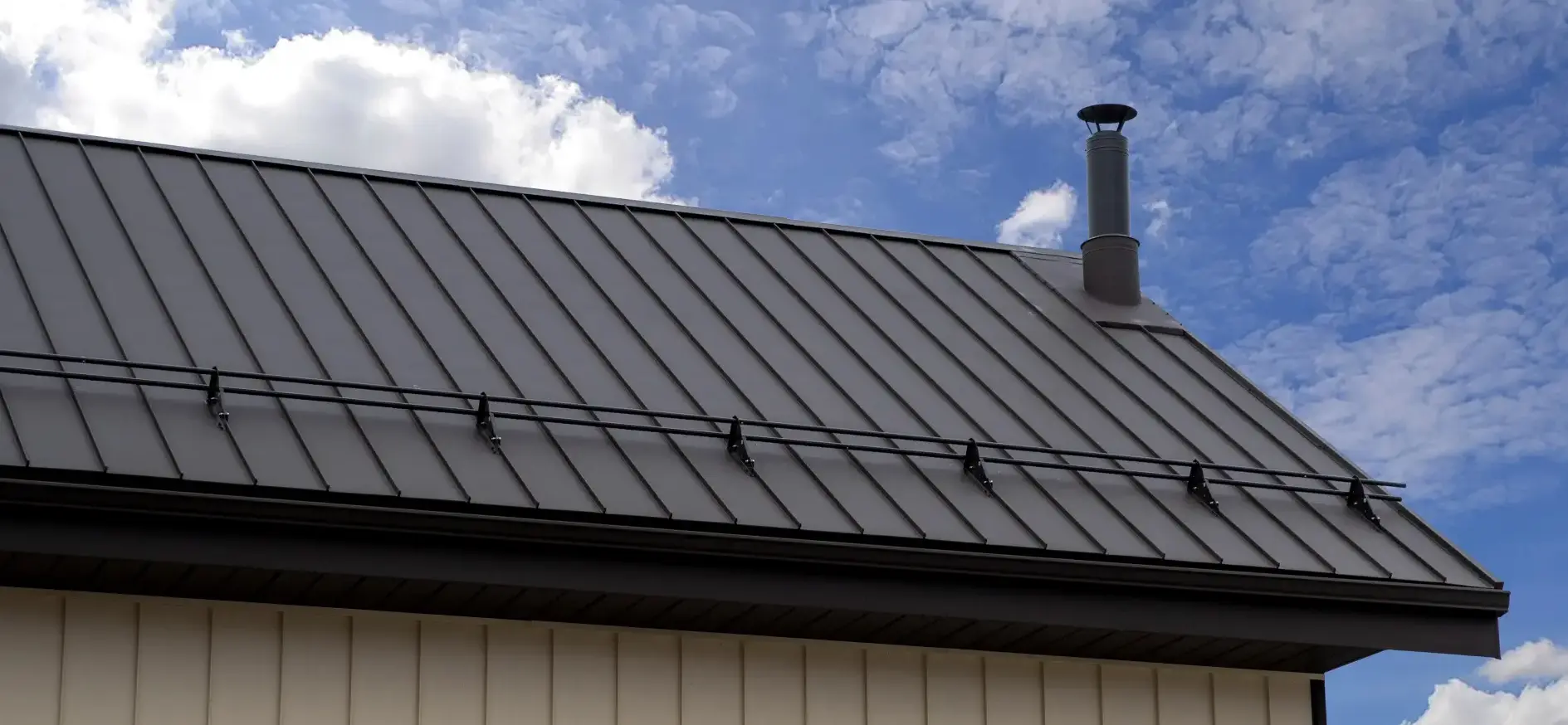
Types of Metal Roofing for Homes
When choosing a metal roof for your home, it helps to understand the different types available. Each type of metal offers unique benefits in terms of strength, appearance, and maintenance. Below are some of the most common choices for domestic properties. Steel is one of the most widely used materials for metal roofing. It is long-lasting, and usually treated with a protective coating that helps prevent the appearance of rust. Homeowners can choose from galvanised or galvalume steel, both of which provide strong resistance to weathering.
Aluminium is lightweight and resistant to rust, although other forms of corrosion still need consideration, making it ideal for homes in coastal areas. Unlike some other metals, aluminium does not rust. Its thermal performance depends on the finish and the insulation and ventilation of the complete roof.
Copper is known for its striking appearance and its ability to create a natural patina over time. This greenish surface layer protects the roof while giving the home a distinctive look. Copper is one of the most durable roofing metals, lasting for over a century in some cases.
Zinc is another premium option valued for its self-healing properties. Minor scratches can disappear as the material develops its protective layer. Zinc is also a great material for the environment, as it is fully recyclable and needs much less energy to be produced against other commonly chosen metals. Its strength and low maintenance make it a strong choice for homeowners looking for a sustainable option.
Energy Efficiency and Environmental Impact
Metal roofing is incredibly strong and lasts for many years, but it also offers benefits for energy use and the environment. Understanding these benefits can allow you to make an informed decision on which type of roofing to select. Metal roofs are quite reflective, so they tend to reflect much of the sun's heat instead of absorbing it. This can keep a house cooler during the summer, reducing the need for air conditioning. You'll also find that metal roofs are coated with special finishes that improve their reflective qualities. In winter, metal roofing can be paired with proper insulation to help retain warmth inside the home.
Unlike many other roofing materials, metal is often made with recycled content, which can then be fully recycled at the end of its life.
This reduces the amount of waste sent to landfill. Because metal roofs last much longer than traditional materials such as asphalt, they also need replacing less often, which further lowers their environmental impact.
In addition, choosing lighter coloured finishes can reduce the urban heat effect, helping to keep local areas cooler.
Maintenance and Care Tips
One of the best parts of metal roofing is that it doesn't need as much upkeep as many other materials. However, some simple care steps will help you make sure it performs well and lasts for decades. Check your roof at least twice a year, ideally in spring and autumn. Look for signs of loose panels, damaged coatings, or build-up of leaves and debris. Inspections after heavy storms are also recommended. Remove any existing leaves, branches, and dirt from the surface of your roof and its gutters. Keeping gutters clear will prevent water build-up, which can cause damage over time. It's best to use a soft brush or at least a low-pressure hose for cleaning to avoid scratching the surface.
Many metal roofs come with their own protective finishes. As time passes, these may need to be reapplied to maintain any resistance to rust and fading. Check the manufacturer’s advice for suitable products and schedules. Trim nearby trees to stop branches from rubbing against the roof. Avoid walking on the roof yourself. Make visual checks from a safe position at ground level and arrange a qualified contractor for work at height. They can spot potential issues early and carry out repairs safely.
Are you considering metal roofing installation or replacement?
Riverside provides metal roofing installation, replacement, repairs and cladding for homes and commercial buildings across London, Oxfordshire and Cambridgeshire. Our services include zinc, copper and aluminium roofing, with coverage in the following areas:
Lifespan and Long-Term Value
One of the strongest reasons to choose metal roofing is its long lifespan and the value it supplies over time. Although the starting cost can often be much higher than other options, the balance of cost and benefit depends on specification, maintenance and how long you expect to own the home. Metal roofs usually last between 40 and 70 years, depending on the material. Premium options such as copper and zinc can last well over 100 years with proper care. This is far longer than traditional roofing materials like asphalt, which often need replacing every 15 to 20 years.
Metal roofing stands up well to harsh weather conditions, including heavy rain, snow, and high winds. It is also resistant to fire, rot, and insect damage. Because of this durability, fewer repairs are usually needed over its lifetime.
Although the initial investment may be a bit higher than usual, there will be a reduced need for any repairs, and replacements can make metal roofing more cost-effective in the long run. An insulated, well-detailed roof can help manage heating and cooling demand; the metal covering alone does not establish savings.
A well-installed metal roof may appeal to buyers for its appearance and durability, but an increase in resale value is not guaranteed. Homeowners can also largely benefit from warranties that often extend for several decades, offering further peace of mind.
Installation Process Explained
The contractor should establish whether the old covering must be removed. An overlay is appropriate only where the specified system and the condition of the existing roof allow it. The roof structure is then checked to make sure it is strong enough to support the new material. Any repairs to the underlying framework are completed at this stage. A protective layer called an underlayment is added to the roof deck. Its role depends on the roof build-up; it is not a substitute for designed weatherproofing, moisture control or acoustic performance. It also gives a smooth surface for the metal panels or shingles to sit on.
Metal panels or shingles are carefully laid out and secured to the roof structure using fasteners. The method they use will usually depend on the system chosen, such as standing seam panels or interlocking shingles. Proper alignment is key to making sure you get a watertight fit and a neat appearance. Flashing is installed around roof edges, chimneys, vents, and skylights to prevent leaks. Sealants may also be applied where needed to keep water out. Once the roof is fully installed, the contractor will check all fastenings, edges, and joints. This final inspection exists to assure the roof is secure, weatherproof, and ready to last for decades.
Match the Roof System to Your Home
Start with pitch, dormers, valleys, chimneys and roof windows. Standing-seam trays can suit contemporary extensions and some curved designs, while seam width and direction affect the appearance from the street. Confirm the chosen system’s permitted pitch and support requirements before settling on a material.
The existing deck and rafters need checking even when the new covering is light. Insulation and replacement decking add weight, and changing the roof covering does not repair hidden timber defects. View material samples outdoors to compare texture, glare and weathering alongside the walls and windows.
What Current Insulation Figures Mean
The Energy Saving Trust’s current guidance says an uninsulated home can lose around 25% of its heat through the roof. It also discusses increasing loft insulation from around 120mm to 270mm. These figures concern heat loss and a loft-insulation arrangement; they do not mean a metal covering will reduce a heating bill by 25%.
A loft insulated at ceiling level needs a different detail from a habitable loft or an extension with insulation within the roof assembly. Agree the complete build-up, including airtightness, vapour control and any required ventilation. Appropriate thickness depends on the material and design, so a loft-insulation depth should not be copied into every metal roof specification.
Summer Comfort and Rain Noise
The Met Office’s September 2026 report provisionally recorded a UK summer mean temperature of 16.5°C, 1.9°C above the 1991 to 2020 average. That gives useful context for discussing overheating, particularly in rooms directly below the roof.
Consider roof-window shading, ventilation and insulation alongside the metal finish. Bare sheet over an open structure sounds different in rain from a supported and insulated roof above a finished ceiling. Ask how the deck, insulation and ceiling will control sound; a thin underlay alone should not be presented as a guarantee of a quiet bedroom.
Understand Lifespan Estimates and Warranties
For zinc specifically, VMZINC’s current technical FAQ says a correctly designed and installed roof can exceed 100 years, while very severe industrial or marine exposure can reduce expected life to around 60 years. These are manufacturer estimates under stated conditions, not a universal warranty for domestic metal roofing.
Ask which parts of the quotation cover the metal, finish and workmanship, and whether gutters, sealants or other components may need attention sooner. Keep product information and maintenance instructions. A long-lived covering depends on a supporting deck, moisture-control design and junctions that work with it.
What a Useful Roofing Quotation Should Include
Request a written scope identifying the metal and thickness, seam or profile, deck preparation, insulation, flashings and rainwater goods. The price should explain scaffolding, temporary weather protection, removal, disposal, VAT and how hidden repairs will be agreed. Quotations for different build-ups are difficult to compare even if both say metal roofing.
Confirm the project’s planning and building-control position with the relevant authority or adviser, particularly where the appearance changes or heritage restrictions may apply. Ask how long the home may be exposed during work, who checks the finished details and what documents you receive at handover. For later inspections, use a qualified contractor rather than walking on the roof yourself.
If you're searching for professionals who can help you install a new metal roof for your home, give us a call. Our team are always available throughout the local area to provide domestic and
commercial metal roofing installations and repairs.