Copper roofing is durable and long-lasting, but problems can still develop due to poor installation, weather exposure, blocked drainage or contact with unsuitable materials. This article explains what the most common copper roofing issues are and why they happen.
What Causes Problems with Copper Roofing?
The main problems with copper roofing are often caused by poor installation, unsuitable fixings, trapped moisture and contact with incompatible materials.
Copper expands and contracts as the temperature changes, so the roof must have joints and fixings that allow the panels to move safely. If this aspect is not considered, the panels may buckle, split or pull away from their supports.
Poorly-formed seams, damaged flashing and blocked drainage can also allow water to enter the roof covering, which can then damage the roof structure, insulation or internal finishes. Copper can also react with certain metals when moisture is present, and direct contact with aluminium or zinc can cause the copper to corrode.
Copper Roof Leaks and Water Damage
Although the copper itself can resist water and corrosion well, leaks can damage the materials beneath the metal covering. Trapped water can soak the insulation, timber roof boards and internal ceilings, which can lead to stains, mould, timber decay and a reduction in insulation. Water can also freeze during cold weather, which can put extra pressure on any weak joints or openings.
Leaks can sometimes be hard to locate in copper roofs since the water may travel along the roof structure before appearing inside the building. In this case, small defects can cause damage to appear further away from where the entry point actually is.
Loose or Damaged Copper Panels
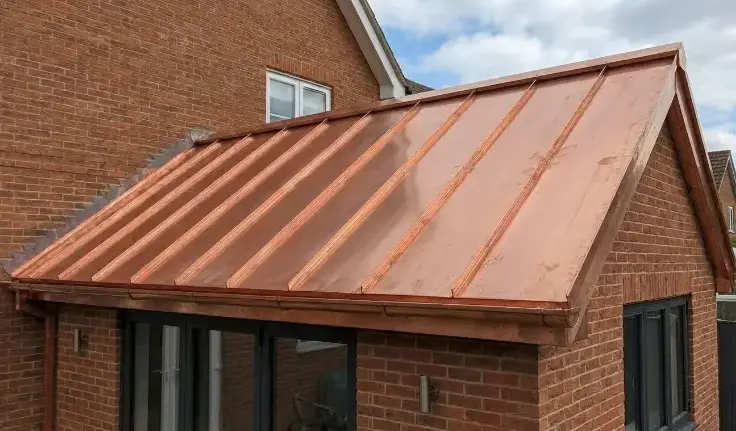
Copper panels may become loose due to a poor installation, failed fixings, strong winds or repeated expansion and contraction as temperatures change.
When a panel lifts or moves, rainwater can enter through small gaps in the seams and joints, which can end up damaging your insulation, timber roof boards, ceilings and internal finishes.
Loose sections can also put extra strain on the nearby panels and fixings, which can cause the problem to spread. Dents, splits and punctures can affect your drainage, and damaged roof edges can weaken the connections between the panels.
Cracks Caused by Expansion and Contraction
Copper roofs expand when the temperature rises and contract when the temperature falls. This movement happens naturally because metal changes size as it heats up and cools down. However, over time, this movement can put stress on the panels, seams, joints and fixings, which can cause them to crack.
Rigid fixings, panels that are too large or poorly designed joints can prevent the copper from moving freely. Stress can then build up around the seams, edges and connection points, and cause the panels to split or crack. Different parts of the roof can also warm up and cool down at different rates, especially if some areas receive direct sunlight and others don't, which can add further strain.
Problems with Copper Roof Seams and Joints
The main problems with copper roof seams and joints are splitting, loose connections and water entering through gaps. These issues can impact the roof’s ability to keep the building dry, and if the seams and joints can't move enough, repeated stress can cause them to crack or pull apart.
A bad installation, weak soldering, unsuitable fixings and incorrect panel sizes can also increase this risk since strong winds can lift poorly-secured edges, and standing water can enter through weak joints and damage the materials below. Dirt, leaves and blocked drainage can also retain moisture around the seams, which can increase the risk of leaks.
Corrosion Caused by Contact with Other Metals
Copper roofs can begin to corrode when they come into contact with other metals while moisture is present. This process is called galvanic corrosion, and it happens because metals have electrical properties, which can cause one metal to corrode faster than the other when there's water between them.
Aluminium, zinc and some types of steel can be affected when they are connected directly to copper. Copper run-off can also carry small amounts of copper onto other metal surfaces, which can increase the rate of corrosion there. Problems may develop around the fixings, gutters, flashings, pipes and roof joints if incompatible materials are used.
Corrosion can weaken nearby metal components, create holes and damage important connections, which can cause the panels, flashings or fixings to become loose and increase the risk of water entering the roof. Roofers can mainly reduce these risks by using compatible metals, suitable copper or stainless steel fixings, and separating the materials with the right barriers.
Uneven Patina and Colour Changes
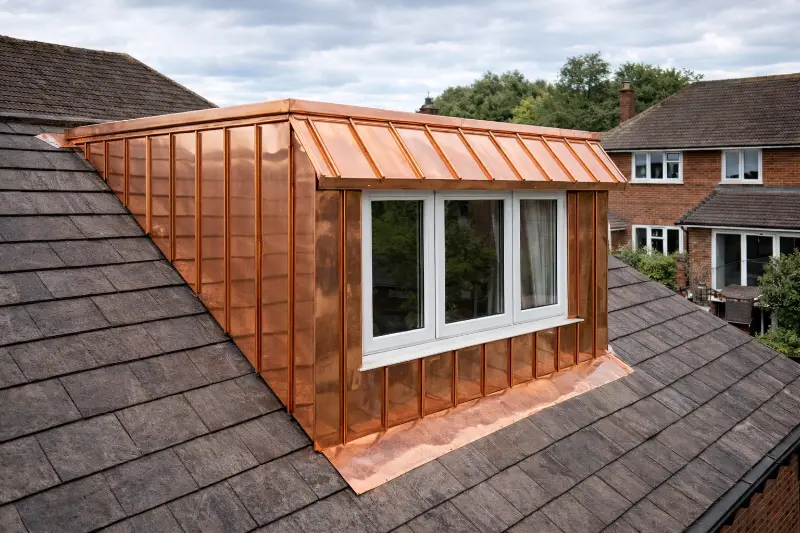
Issues like an uneven patina and colour changes are common on copper roofs because different areas receive different amounts of rain, sunlight, moisture and air pollution.
Sheltered parts of the roof may change colour slowly, while exposed areas may turn brown, dark grey or green quicker. Water run-off, dirt, oils and contact with other materials can also create streaks or patches. However, these changes are usually cosmetic and do not mean the copper has failed.
In many cases, the copper's colour will become more and more even as the patina continues to form naturally. Roofers may clean any affected areas using suitable products, and they can also remove harmful deposits, improve your drainage or fix the copper's contact with incompatible materials.
Dents Caused by Hail or Falling Debris
Hailstones, falling branches, loose tiles and other debris can all strike a copper roof and leave visible marks behind. Thin copper panels and areas with limited support underneath are often more likely to become dented, and small dents typically do not affect the roof’s ability to keep out water.
However, more serious damage can distort the seams, joints and drainage channels, which can create low areas where water can pool or begin to weaken the connections between the panels. Sharp debris can also puncture the copper.
Roofers usually inspect the damaged area before deciding on how to repair the damage. Minor dents can be carefully reshaped using suitable tools, whereas severely dented, split or punctured panels often need patching or replacing. Any damaged seams and fixings should also be repaired, and removing nearby branches can help reduce the risk of further damage.
Blocked Gutters and Poor Drainage
Blocked gutters and poor drainage can cause a range of copper roof issues because leaves, moss, dirt and other debris can stop rainwater from flowing away correctly. This can cause dirt and grime to build up around the roof edges, valleys, outlets and joints, and although copper resists normal weather exposure, standing water can enter the seams or flashing and damage the materials underneath,
Overflowing gutters can also stain your walls, damage the timber and cause damp to form around the building. During cold weather, trapped water can freeze inside the roof and put pressure on the joints and fittings. These problems are usually fixed by clearing the gutters, downpipes and drainage outlets, as well as resealing any weak joints.
Problems Caused by Poor Installation
Incorrectly formed seams or joints can let rainwater enter beneath the panels; loose, unsuitable or badly positioned fixings can cause the roof sheets to move during strong winds, and if the panels are fixed too tightly, they can buckle or split. Installing the wrong panel sizes can also create similar issues.
Poor flashing around the chimney, valley, roof edges and vents can also lead to leaks, and inadequate drainage can allow water to pool. These faults can damage your insulation, timber and internal finishes over time.
Riverside provides professional copper roof installation services for homes and commercial properties. Each roof is designed to suit your building and be reliable, low-maintenance, and long-lasting.