Copper roofing and rainwater harvesting
Copper roofing and rainwater harvesting need to be planned together. A roof may shed rain effectively while its runoff still needs assessment for the intended use. Before connecting a new copper covering to a water butt or collection tank, establish which roof areas will feed it, what else the water passes over and who will specify the collection system.
This guide focuses on those decisions, rather than copper’s lifespan or appearance. For a home extension or commercial project, separating the roofing design from the water-use brief helps avoid discovering incompatible materials or unsuitable collection arrangements after installation.
Why recent rainfall figures need context
The Met Office’s January 2026 provisional summary recorded 1,041.2 mm of UK rainfall in 2025, 90% of the 1991-2020 average. It also reported that March to August rainfall was below half the seasonal average across much of southern and central England. Those national figures describe a particular year, not the amount a property in Oxford will collect. See the Met Office’s 2025 weather summary.
Use local rainfall information and an estimate of seasonal demand when discussing storage. Annual totals can conceal long dry periods followed by short wet spells. A large yearly collection estimate does not establish that water will be available on the particular summer days when it is wanted.
Understand what can enter copper roof runoff
Water collected from a roof has travelled across an exposed surface. Leaves, bird debris, deposits and components elsewhere on the drainage route can affect it. Copper can also be released into runoff; the amount is not a fixed property of every copper roof and cannot be inferred simply from its colour.
A peer-reviewed review of outdoor copper runoff identifies rainfall conditions, surface characteristics and exposure as relevant factors. Its practical implication is to assess the actual project. A mature patina or clean-looking water does not, by itself, demonstrate suitability for the proposed collection use.
Define the intended use before choosing equipment
A garden water butt, an irrigation system and a building-wide rainwater installation are different briefs. Describe the intended use to the collection-system designer before choosing filters, storage or connections. Do not assume that equipment advertised for ordinary roof runoff is appropriate for water from every roof material.
Ask which contaminants the proposed treatment addresses and how that suitability will be verified. A debris screen can remove leaves without demonstrating removal of dissolved substances. The roofer’s scope should identify the covering and drainage materials; the water-system specification should explain the requirements for the intended use. This distinction keeps responsibility clear.
Are you considering metal roofing installation or replacement?
Riverside provides metal roofing installation, replacement, repairs and cladding for homes and commercial buildings across London, Oxfordshire and Cambridgeshire. Our services include zinc, copper and aluminium roofing, with coverage in the following areas:
Map the full route from roof to storage
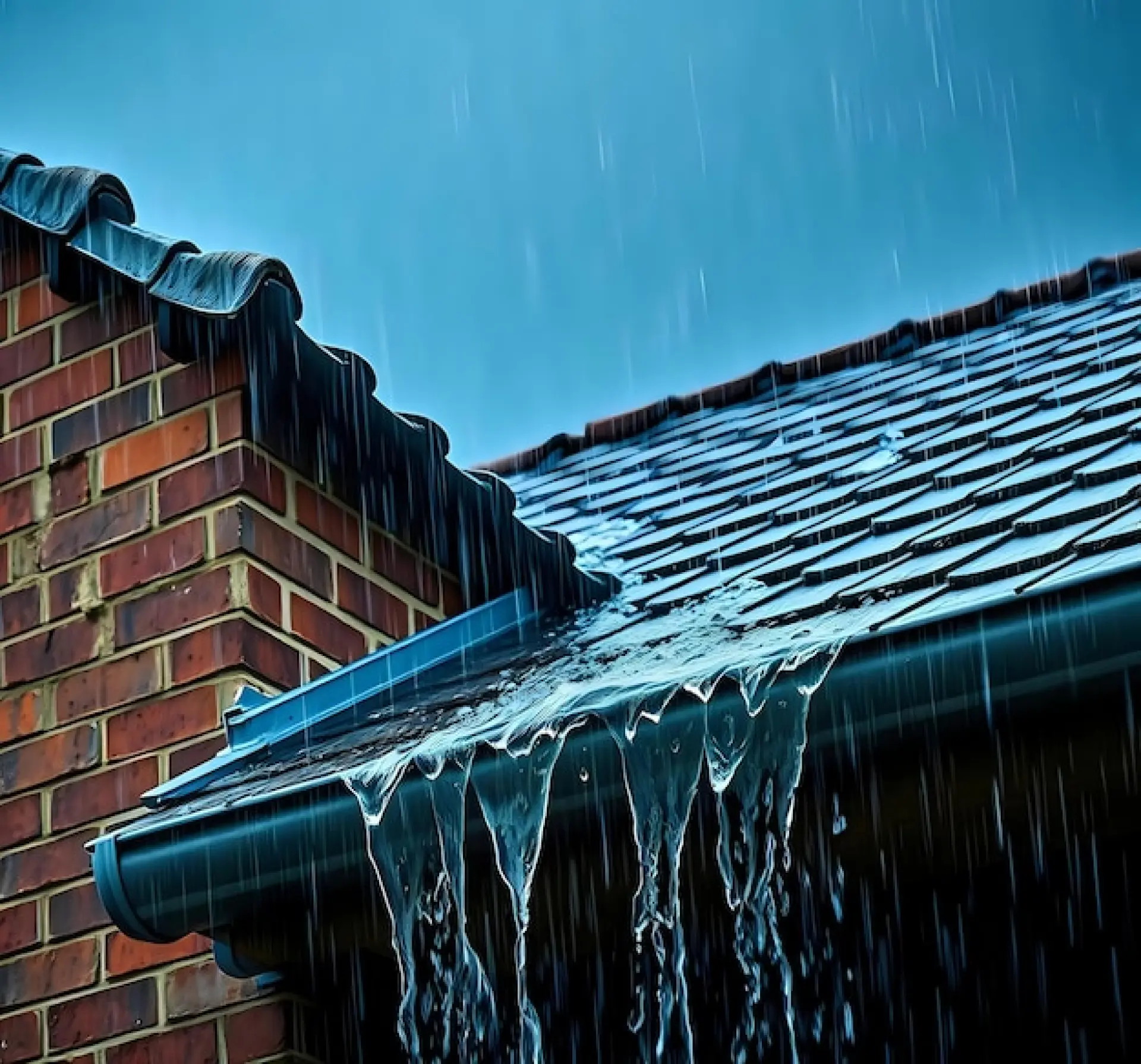
Draw the contributing roof slopes, valleys, outlets, gutters and downpipes. Include small copper details as well as the main covering, because water may cross flashing or an adjacent roof before reaching a collection point. Mark where flows combine and where an alternative collection area could be kept separate.
For projects involving copper roofing, Riverside can discuss the metal roof and its weathering details as part of the wider brief. The collection equipment should then be coordinated with those details. Avoid adding a tank connection that restricts an outlet or leaves the roof drainage dependent on equipment that may become blocked.
Keep material compatibility in the specification
Runoff needs a planned route across compatible materials, not merely a convenient downpipe position. Our article on common copper roofing problems and solutions explores why material compatibility matters. This includes gutters, adjacent metal surfaces and fittings below the roof. The Association for Materials Protection and Performance explains that copper-bearing runoff can contribute to deposition corrosion on aluminium components.
Ask the project team to review the complete drainage path when copper and other metals share an elevation. Connections and discharge locations should be shown in the agreed details. This is especially useful on extensions, where a new roof may otherwise empty onto retained gutters or coverings that were specified for a different material.
Do not turn a research result into a guarantee
A 2015 field study examined treatment of runoff from a particular copper roof using planter boxes and swales. It found substantial reductions under its test conditions, but that is evidence about those systems and that site. It is not proof that an ordinary garden filter or water butt provides the same result. Read the published runoff-treatment study.
If treatment is proposed, ask for evidence relevant to the roof, expected flow and intended use. Identify inspection and maintenance requirements as well as initial performance. A collection system that is difficult to access or maintain may not remain in the condition assumed by its design.
Prepare a coordinated roofing brief
Before requesting a quotation, record the roof dimensions, proposed copper finish, collection use and existing gutter materials. Add photographs showing where water currently flows and identify any planned extension or change in drainage. These details help the roofing and collection-system teams discuss the same project.
Our domestic metal roofing services and commercial metal roofing services include installation, replacement and repairs. The useful next step is a defined scope for the copper covering and drainage, with the specialist collection requirements agreed alongside it. Keep the handover drawings and maintenance information together so future changes do not undo that coordination.
Discuss Your Copper Roof Plans
Tell us about your copper roof, existing drainage and proposed rainwater collection so we can discuss the roofing scope.